Hafnium Metal: Properties, Production, Forms, and Uses
views, Updated: July 23, 2026 by aemmetal
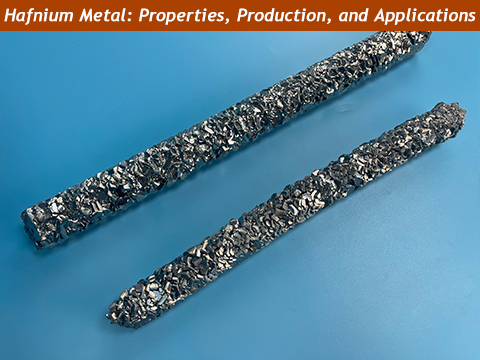
What Is Hafnium Metal?
Hafnium is a rare, silver-gray metal with the chemical symbol Hf and atomic number 72. It belongs to the
refractory metal family, a group of metals known for their excellent performance under extreme conditions.
Although hafnium is not used in large quantities compared with common metals such as steel or aluminum, it has become an important material in advanced industries because of its unique properties. Hafnium combines a very high melting point, excellent corrosion resistance, strong neutron absorption ability, and good thermal stability.
These properties make hafnium suitable for demanding applications where ordinary metals cannot perform well. Today, hafnium metal and its compounds are mainly used in:
·
Nuclear industry — control rods and neutron-absorbing components
·
Aerospace industry — high-temperature alloys for engines and spacecraft
·
Semiconductor industry — hafnium oxide (HfO₂) for advanced electronic devices
·
Coating industry — thin films and protective coatings
Discovery and History of Hafnium
The discovery of hafnium was an important milestone in the development of modern chemistry.
In the 19th century, when Dmitri Mendeleev created the periodic table, he predicted that an unknown element with atomic number 72 should exist. For many years, scientists searched for this missing element, but early research failed to identify it.
In 1911, French chemist Georges Urbain claimed to have discovered element 72 and named it “celtium.” However, later research using X-ray spectroscopy proved that this discovery was incorrect.
The breakthrough came in 1923. Danish physicist Niels Bohr predicted that element 72 should be similar to zirconium and belong to the same chemical group, rather than being a rare earth element.
Based on this theory, Hungarian chemist George de Hevesy and Dutch physicist Dirk Coster analyzed zirconium minerals using X-ray spectroscopy. They successfully identified the new element and separated it from zirconium ore.
The new element was named
hafnium, after
“Hafnia,” the Latin name for Copenhagen, where the discovery took place.
Basic Information About Hafnium Metal
|
Property |
Value |
|
Chemical Symbol |
Hf |
|
Atomic Number |
72 |
|
Atomic Weight |
178.49 |
|
Density |
13.31 g/cm³ (20°C) |
|
Melting Point |
2233°C |
|
Boiling Point |
4603°C |
|
Mohs Hardness |
About 5.5 |
|
Crystal Structure |
Hexagonal close-packed |
Where Does Hafnium Come From?
Hafnium is rarely found as a pure metal in nature. It is mainly obtained from
zirconium ores, especially
zircon sand (zirconium silicate).
Hafnium and zirconium always occur together because they have very similar chemical properties. In natural zircon ores, hafnium usually makes up only about
0.5–2% of the zirconium content.
Separating hafnium from zirconium is a highly complex process because the two elements behave almost identically during chemical reactions. Advanced separation and purification technologies are required to produce high-purity hafnium metal.
This difficult production process, combined with hafnium's unique performance, makes it a valuable material for specialized applications in nuclear technology, aerospace, electronics, and advanced manufacturing.
Key Properties of Hafnium Metal
Hafnium is a valuable material because it can work reliably in
extreme environments where many other metals fail. Its most important advantages include high-temperature resistance, corrosion resistance, strong neutron absorption, and excellent chemical stability.
These properties make hafnium useful in industries such as nuclear power, aerospace, semiconductors, and advanced coatings.
1. High Temperature Resistance
One of hafnium’s most important properties is its
very high melting point of 2233°C (4051°F).
This means hafnium can remain stable and maintain its strength even under extremely high temperatures. For this reason, hafnium is often added to high-performance alloys to improve their ability to withstand heat.
Typical applications include:
· Aerospace engine parts
· Rocket components
· High-temperature alloys
· Extreme heat protection materials
When added to certain alloys, hafnium can help improve:
· High-temperature strength
· Oxidation resistance
· Service life
2. Excellent Corrosion Resistance
Hafnium has very good resistance to corrosion and oxidation.
When hafnium is exposed to oxygen, it naturally forms a thin and stable
hafnium oxide (HfO₂) layer on its surface. This protective layer prevents further chemical reactions and helps protect the metal underneath.
Because of this stability, hafnium can be used in environments with:
· High temperatures
· Reactive chemicals
· Oxidizing conditions
This makes hafnium suitable for demanding industrial applications where long-term reliability is required.
3. Strong Neutron Absorption Ability
One of the most unique properties of hafnium is its ability to
absorb neutrons.
Hafnium can capture neutrons very effectively, making it an important material for controlling nuclear reactions. In nuclear reactors, controlling the movement of neutrons is essential for maintaining safe and stable operation.
Because of this property, hafnium is widely used for:
· Nuclear reactor control rods
· Neutron-absorbing components
· Nuclear safety systems
This is also the main difference between hafnium and zirconium. While zirconium is used in nuclear fuel systems because it absorbs very few neutrons, hafnium is selected when strong neutron absorption is required.
4. Important Role in Semiconductor Technology
Besides hafnium metal, hafnium compounds are also widely used in advanced technologies.
The most important example is
hafnium oxide (HfO₂). It has excellent electrical properties, including a high dielectric constant and good thermal stability.
In semiconductor manufacturing, HfO₂ is used as a
high-k dielectric material in transistor structures. It helps:
· Reduce electrical leakage
· Improve chip performance
· Support smaller and more efficient electronic devices
Today, hafnium-based materials are important in modern semiconductor production.
5. Good Compatibility with High-Performance Alloys
Hafnium can be combined with other metals to create materials with improved performance.
When added to alloys, hafnium can help improve:
· Heat resistance
· Mechanical strength
· Oxidation resistance
Common alloy systems containing hafnium include:
· Nickel-based superalloys
· Hafnium-tantalum alloys
· Hafnium-niobium alloys
These materials are used in applications that require reliable performance under extreme conditions.
6. Good Biocompatibility
Hafnium has relatively low toxicity and shows good compatibility with biological environments.
Although medical applications are still under research and are not currently its main market, hafnium-based materials have attracted interest for potential future biomedical uses.
Summary of Hafnium Metal Properties
|
Property |
Advantage |
|
High melting point (2233°C) |
Performs well in extreme heat |
|
Strong neutron absorption |
Ideal for nuclear control applications |
|
Corrosion resistance |
Suitable for harsh environments |
|
Thermal stability |
Maintains performance at high temperatures |
|
Hafnium oxide properties |
Supports advanced semiconductor technology |
|
Alloy compatibility |
Improves high-performance materials |
Hafnium is not a high-volume metal, but its special properties make it highly valuable in applications where
safety, reliability, and extreme performance are required. Its unique combination of thermal, chemical, and nuclear properties allows it to support some of the most advanced technologies today.
Hafnium Metal Grades and Product Forms
Hafnium is available in several forms depending on the requirements of different industries. Due to its high melting point, excellent corrosion resistance, thermal stability, and strong neutron absorption ability, hafnium materials are mainly used in nuclear energy, aerospace, semiconductor manufacturing, and advanced alloy applications.
Because hafnium is naturally found together with zirconium, producing high-quality hafnium requires advanced separation and purification technologies. Different product forms are developed to meet specific application requirements, including
hafnium sponge, high-purity hafnium crystal bar, hafnium wire, hafnium sputtering targets, and hafnium alloys.
1. Hafnium Sponge
Hafnium sponge is an important intermediate material used for producing high-purity hafnium metal and hafnium-based alloys.
It has a silver-gray, porous appearance and maintains hafnium’s typical characteristics, including:
· High melting point
· Good chemical stability
· Excellent corrosion resistance
· Strong performance at elevated temperatures
Hafnium sponge is mainly produced after separating hafnium from zirconium-containing ores. Since hafnium and zirconium have very similar chemical properties, the separation process is technically challenging and requires advanced purification methods to control zirconium content and other impurities.
Due to its role as a raw material, hafnium sponge is mainly used for:
· Production of high-purity hafnium metal
· Manufacturing hafnium-based alloys
· Nuclear industry materials
· Aerospace high-temperature materials
Proper packaging and storage are required to prevent contamination and maintain material quality before further processing.
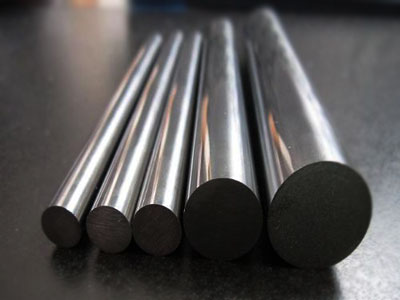
2. High-Purity Hafnium Metal (Hafnium Crystal Bar)
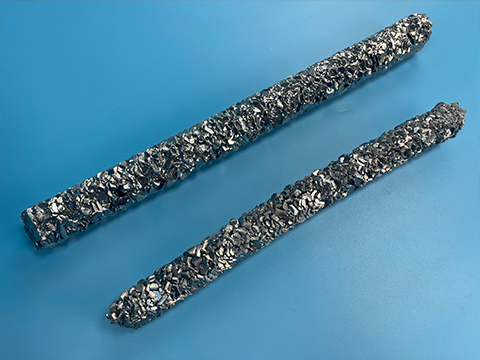
High-purity hafnium metal, also known as
hafnium crystal bar, is one of the highest-quality forms of hafnium available. It is produced through advanced refining processes to achieve high purity, excellent uniformity, and stable material performance.
High-purity hafnium is mainly used as a raw material for producing
hafnium-based alloys and other advanced materials.
Its key properties include:
· Extremely high melting point (2233°C)
· Excellent thermal stability
· Strong corrosion resistance
· Good mechanical performance at high temperatures
One notable characteristic of hafnium is its excellent
thermal response capability. Compared with zirconium and titanium, hafnium can absorb and release heat more rapidly, making it suitable for applications involving rapid temperature changes and extreme thermal conditions.
Because of its refractory properties and high-temperature performance, high-purity hafnium is used in:
· Jet engine components
· Missile and rocket structural materials
· High-temperature turbine blades
· Engine valves and nozzles
· Other aerospace heat-resistant components
Hafnium crystal bar is also an important material for producing high-performance alloys, where hafnium additions can improve:
· High-temperature strength
· Oxidation resistance
· Service life under extreme conditions
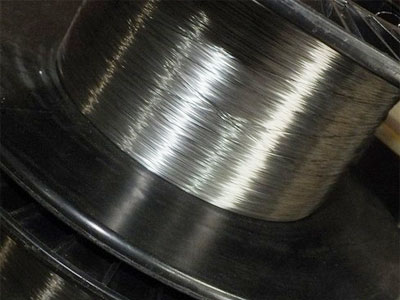
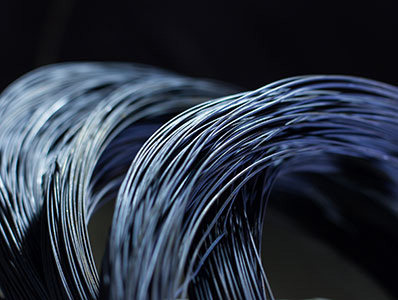
3. Hafnium Wire
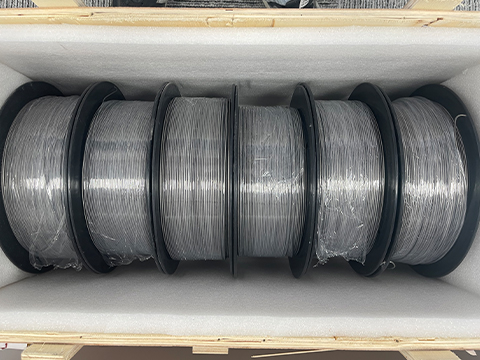 Hafnium wire
 is a specialized hafnium product designed for high-temperature applications where excellent heat resistance and stability are required.
A typical hafnium wire specification may include:
·
Hf + Zr content: ≥99.98%
·
Zr content: ≤3%
Due to its high melting point and ability to maintain performance under intense heat, hafnium wire is mainly used for:
· Plasma cutting electrodes
· Cutting machine electrode tips
· High-temperature electrical components
In plasma cutting applications, hafnium wire is often used as an electrode material because it can withstand the extremely high temperatures generated during the cutting process while maintaining stable performance.
4. Hafnium Sputtering Target
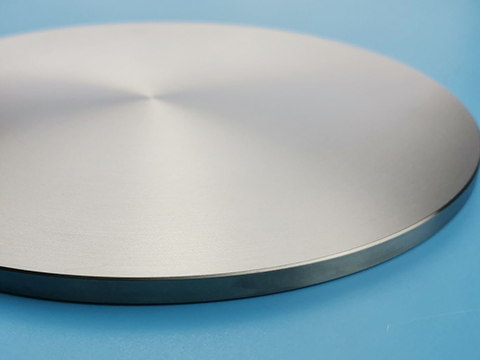 Hafnium sputtering targets
 are specialized materials used in
physical vapor deposition (PVD) processes to produce thin hafnium films.
During the sputtering process, hafnium atoms are released from the target surface and deposited onto a substrate to form a thin coating layer with controlled properties.
High-quality hafnium sputtering targets require:
· High purity
· High density
· Uniform composition
· Low impurity content
They are mainly used in:
· Semiconductor thin films
· Electronic device manufacturing
· Optical coatings
· Protective coatings
With the continuous development of advanced semiconductor and coating technologies, hafnium sputtering targets are becoming increasingly important for applications requiring precise thin-film performance.
5. Hafnium Alloys
Hafnium is often added to other metals to improve their performance in high-temperature and demanding environments. By combining hafnium with metals such as nickel or copper, manufacturers can develop alloys with improved
strength, oxidation resistance, thermal stability, and electrical performance.
Nickel-Hafnium Alloy
Nickel-hafnium alloy is a high-temperature alloy mainly used in aerospace and industrial applications.
The addition of hafnium improves the alloy’s:
· High-temperature strength
· Oxidation resistance
· Corrosion resistance
· Service life under extreme conditions
Typical applications include:
· Aerospace turbine engine components
· High-temperature structural parts
· Nuclear and chemical equipment requiring corrosion resistance
Copper-Hafnium Alloy
Copper-hafnium alloy is a functional alloy combining the high strength of hafnium with the excellent electrical conductivity of copper.
It offers a good balance of:
· High mechanical strength
· Good electrical conductivity
· Improved heat resistance
Copper-hafnium alloy is mainly used in:
· Electronic components
· Electrical connectors and cables
· Aerospace components
· Molds, bearings, and precision mechanical parts
Hafnium-containing alloys provide improved performance in applications where traditional materials cannot meet requirements for
high temperature, strength, durability, or electrical performance.
How Is Hafnium Metal Produced?
Hafnium metal production is a complex process because hafnium is rarely found as an independent mineral in nature. It mainly comes from
zircon sand (zirconium silicate), where hafnium naturally exists together with zirconium.
The biggest challenge in hafnium production is separating hafnium from zirconium. Since the two elements have very similar chemical properties, multiple purification and conversion steps are required before high-purity hafnium metal can be produced.
The general production route is:
Zircon sand → Zirconium oxychloride → Hafnium oxide → Hafnium tetrachloride → High-purity hafnium tetrachloride → Hafnium sponge → High-purity hafnium metal / Hafnium alloys
1. Zircon Sand Processing
The production process starts with
zircon sand, the main natural source of hafnium.
Zircon sand contains mainly zirconium, with a small amount of hafnium. Through chemical treatment, zircon sand is converted into zirconium-based compounds, such as
zirconium oxychloride.
During this process, hafnium remains together with zirconium and requires further separation.
2. Hafnium and Zirconium Separation
Separating hafnium from zirconium is the most technically challenging step in the production process.
Because hafnium and zirconium have very similar chemical properties, advanced separation technologies are required to selectively separate hafnium compounds from zirconium compounds.
After separation, hafnium is converted into
hafnium oxide (HfO₂), an important intermediate material for further processing.
3. Conversion to Hafnium Tetrachloride
Hafnium oxide is further processed through chlorination to produce
hafnium tetrachloride (HfCl₄).
High-purity hafnium tetrachloride is a key intermediate material because it can be reduced to produce metallic hafnium.
The purification of hafnium tetrachloride is critical because impurities can affect the quality and performance of the final hafnium products.
4. Production of Hafnium Sponge
High-purity hafnium tetrachloride is reduced through a metallurgical process to produce
hafnium sponge.
Hafnium sponge is a porous, silver-gray intermediate material that serves as the primary raw material for producing:
· High-purity hafnium metal
· Hafnium alloys
The quality of hafnium sponge directly affects the purity and performance of downstream hafnium products.
5. Production of High-Purity Hafnium Metal and Hafnium Alloys
Hafnium sponge can be further refined and processed into high-purity hafnium metal.
For applications requiring extremely high purity, hafnium may undergo additional refining processes, such as the
iodide refining process (Van Arkel process), to produce
hafnium crystal bar.
The refined hafnium can then be manufactured into different products, including:
· High-purity hafnium crystal bar
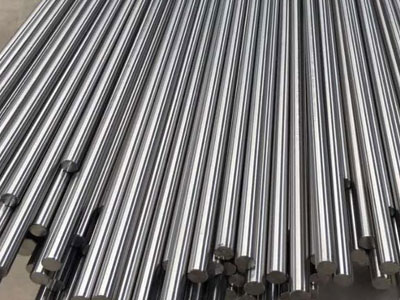
· Hafnium rod and wire
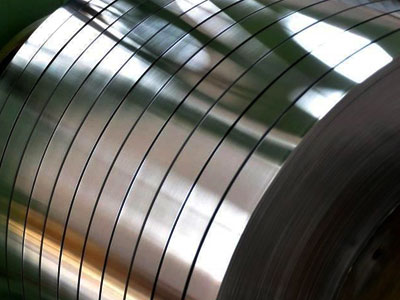
· Hafnium sheet and plate
· Hafnium sputtering targets
· Hafnium alloys
Hafnium alloys are produced by combining hafnium with other metals, such as nickel or copper, to improve properties including high-temperature strength, oxidation resistance, and electrical performance.
Applications of Hafnium Metal and Its Compounds
Unlike common metals that are used for large-scale manufacturing,
hafnium is mainly used in specialized applications where extreme performance is required. Its major applications include nuclear technology, aerospace materials, semiconductor devices, and advanced coatings.
1. Nuclear Industry: Control Rod Materials
One of the most important applications of hafnium is in the
nuclear industry.
Hafnium has a very strong ability to absorb neutrons, which allows it to control nuclear reactions effectively. This makes it an ideal material for
nuclear reactor control rods.
During reactor operation, control rods made with hafnium can absorb excess neutrons and help regulate the speed of the nuclear reaction, improving reactor safety and stability.
Main applications include:
· Nuclear reactor control rods
· Neutron-absorbing components
· Nuclear safety systems
Hafnium is especially valuable in environments where materials must withstand high temperatures, radiation exposure, and long-term operation.
2. Aerospace Industry: High-Temperature Alloys
The aerospace industry uses hafnium mainly as an alloying element to improve the performance of high-temperature materials.
Adding hafnium to nickel-based superalloys and other advanced alloys can improve:
· High-temperature strength
· Oxidation resistance
· Creep resistance
· Service life
These hafnium-containing alloys are used in demanding aerospace components, including:
· Jet engine turbine parts
· Rocket propulsion components
· High-temperature structural materials
Because aerospace systems often operate under extreme heat and pressure, hafnium helps improve the reliability and durability of critical components.
3. Semiconductor Industry: Hafnium Oxide Materials
Hafnium compounds, especially
hafnium oxide (HfO₂), play an important role in modern semiconductor manufacturing.
HfO₂ has excellent electrical insulation properties, high thermal stability, and a high dielectric constant. These characteristics make it a widely used
high-k dielectric material in advanced semiconductor devices.
Hafnium oxide is mainly used for:
· Transistor gate dielectric layers
· Advanced integrated circuits
· Microelectronic components
By reducing electrical leakage and improving energy efficiency, hafnium oxide helps support the development of smaller and more powerful electronic devices.
4. Optical Coatings and Thin Film Applications
Hafnium compounds are also widely used in advanced coating technologies.
Hafnium oxide (HfO₂) and
hafnium nitride (HfN) have excellent optical and mechanical properties, including:
· High refractive index
· Good wear resistance
· High-temperature stability
These materials are commonly used for:
· Laser optical coatings
· Precision optical lenses
· Satellite imaging systems
· Anti-reflective coatings
· Protective thin films
Hafnium-based coatings help improve optical performance while protecting components from heat, oxidation, and mechanical damage.
5. Advanced Energy and Other Applications
Hafnium is also being studied for applications in advanced energy technologies.
In some materials, hafnium can be used as an alloying element or dopant to improve material performance, including electrical and thermal properties.
Potential applications include:
· Advanced superconducting materials
· High-performance electrical components
· Energy-related technologies
Although these applications are still developing, they demonstrate the potential of hafnium in future advanced material systems.
Conclusion
Hafnium is a rare metal, but it has an important role in industries that require high-performance materials. Its excellent heat resistance, corrosion resistance, and neutron absorption ability allow it to work in extreme environments where many other metals cannot.
Today, hafnium is used in critical applications such as nuclear reactors, aerospace components, semiconductor devices, and advanced coatings. As technology continues to develop, the demand for reliable and high-performance materials like hafnium is expected to grow.
Choosing a trusted supplier is important to ensure consistent material quality and performance. As an experienced
hafnium metal supplier, AEM Metal provides high-quality hafnium materials and customized solutions for different industrial applications.
Contact AEM Metal to discuss your hafnium requirements and find the right material solution for your project.