What Is Molybdenum Disulfide (MoS₂)?
Molybdenum disulfide, commonly known as MoS₂, is an inorganic compound made of molybdenum (Mo) and sulfur (S). It belongs to a group of materials called transition metal dichalcogenides (TMDs) and is widely used in lubrication, coatings, electronics, and advanced material research.
One of the most important features of MoS₂ is its unique layered structure. Each layer consists of one molybdenum atom layer between two sulfur atom layers, forming a S-Mo-S structure. These layers are strongly bonded internally, while the connection between layers is relatively weak due to van der Waals forces.
This structure allows the layers to slide easily against each other, giving MoS₂ its excellent low-friction and wear-resistant properties. As a result, it can work as a solid lubricant in environments where traditional oil-based lubricants may fail, such as high vacuum, high pressure, or high-temperature conditions.
Molybdenum disulfide is available in different forms depending on the application, including:
-
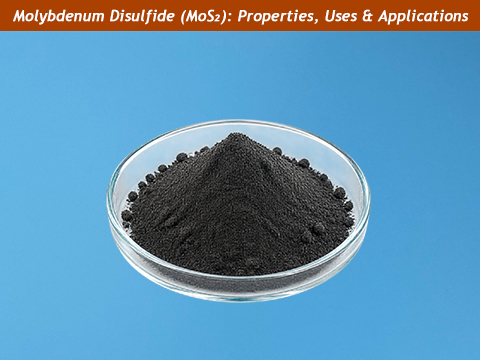
MoS₂ powder: Used as a lubricant additive, composite material component, and research material.
-
MoS₂ coating materials: Applied to surfaces to reduce friction and improve wear resistance.
-
MoS₂ sputtering targets: Used for thin-film deposition in electronic and advanced coating applications.
Due to its combination of excellent lubrication performance, thermal stability, chemical resistance, and semiconductor properties, MoS₂ has become an important material in industries ranging from aerospace and automotive to electronics and energy technologies.
Key Properties of Molybdenum Disulfide (MoS₂)
Molybdenum disulfide (MoS₂) is valued for its excellent lubrication performance, high stability, and unique electrical properties. These advantages make it useful in many industrial and advanced technology applications.
Low Friction and Wear Resistance
The layered structure of MoS₂ allows its layers to slide easily against each other, creating a low-friction surface. This helps reduce wear and extend the service life of mechanical components. Because it can work without liquid lubricants, MoS₂ is especially suitable for vacuum environments, high-load systems, and precision equipment.
High Temperature and Pressure Resistance
MoS₂ can maintain stable performance under high temperatures and heavy pressure. This makes it suitable for demanding applications such as aerospace parts, bearings, gears, and industrial machinery.
Chemical Stability
MoS₂ has good chemical stability and can provide long-lasting protection when used as a lubricant or coating material. It helps improve the durability of components exposed to harsh operating conditions.
Electronic Properties
Besides being a solid lubricant, MoS₂ is also a promising two-dimensional semiconductor material. Its unique electronic properties make it useful in research and emerging applications such as sensors, thin-film electronics, and optoelectronic devices.
How Does Molybdenum Disulfide Work as a Solid Lubricant?
Molybdenum disulfide is one of the most widely used solid lubricants because of its unique layered structure. Unlike liquid lubricants that create a protective oil film, MoS₂ works by forming a low-friction layer between two surfaces. When mechanical parts move against each other, the weak bonding between MoS₂ layers allows them to slide easily. This reduces direct contact between surfaces, lowering friction and minimizing wear.
Advantages of MoS₂ Solid Lubricants
Compared with traditional lubricants, MoS₂ offers several advantages:
-
Works in extreme environments: MoS₂ can maintain lubrication performance in vacuum, high temperatures, and high-pressure conditions where oils and greases may fail.
-
Reduces friction and wear: It helps protect moving components and extend their service life.
-
Requires less maintenance: MoS₂ coatings can provide long-lasting lubrication without frequent reapplication.
Because of these advantages, MoS₂ is commonly used for aerospace components, precision machinery, automotive parts, and industrial equipment that require reliable lubrication under challenging conditions.
Common Applications of Molybdenum Disulfide (MoS₂)
Due to its low friction, high stability, and excellent wear resistance, molybdenum disulfide is widely used in industries that require reliable performance under demanding conditions. Its applications range from traditional mechanical systems to advanced electronic and energy technologies.
Aerospace and Space Applications
In aerospace systems, many components must operate under extreme conditions, including high vacuum, temperature changes, and limited maintenance access. MoS₂ solid lubricants and coatings can provide long-lasting lubrication for moving parts such as bearings, gears, and actuators.
Unlike liquid lubricants, MoS₂ does not evaporate easily in vacuum environments, making it suitable for satellites, spacecraft mechanisms, and other space equipment.
Automotive and Mechanical Components
MoS₂ is commonly used as a lubricant additive and protective coating in automotive and mechanical applications. It helps reduce friction between moving parts, improve wear resistance, and increase component service life.
Typical applications include:
-
Engine components
-
Gears and bearings
-
High-load mechanical systems
-
Metal processing equipment
Industrial Machinery and Precision Equipment
Many industrial machines operate under high loads, high speeds, or continuous working conditions. MoS₂ coatings can help reduce friction and protect components from wear, improving equipment reliability and reducing maintenance requirements. It is often used in:
-
Manufacturing equipment
-
Cutting tools
-
Vacuum equipment
-
Precision mechanical parts
Electronics and Advanced Materials
Beyond lubrication, MoS₂ is also attracting attention as a two-dimensional semiconductor material. Its unique electrical properties make it a potential material for next-generation technologies, including sensors, thin-film electronics, and optoelectronic devices.
Energy Storage and Catalysis
MoS₂ is also being studied in energy-related applications due to its layered structure and active surface sites. It has potential uses in:
-
Lithium-ion battery materials
-
Hydrogen production catalysts
-
Energy conversion technologies
With its combination of mechanical durability and functional properties, MoS₂ continues to play an important role in both established industries and emerging technologies.
Molybdenum Disulfide Powder and Coating Materials
Molybdenum disulfide is available in different forms to meet the needs of various applications. Among them, MoS₂ powder and MoS₂ coating materials are two commonly used forms in industry.
Molybdenum Disulfide Powder
MoS₂ powder is widely used as a solid lubricant additive, coating ingredient, and advanced material. By adding MoS₂ powder to lubricants, plastics, or composite materials, manufacturers can improve friction performance, wear resistance, and durability.
The performance of MoS₂ powder depends on factors such as:
-
Purity: Higher purity materials are preferred for advanced applications that require stable performance.
-
Particle size: Different particle sizes can affect lubrication efficiency, dispersion, and application results.
-
Application requirements: The suitable powder specification depends on whether it is used for lubrication, coatings, composites, or research.
Molybdenum Disulfide Coatings
MoS₂ coatings are used to create a low-friction and wear-resistant surface on components. The coating forms a protective layer that reduces direct contact between moving surfaces, helping improve component performance and service life. Common application methods include spraying, bonding, and thin-film deposition technologies such as sputtering.
MoS₂ coatings are commonly used for:
-
Aerospace components
-
Precision mechanical parts
-
Vacuum equipment
-
High-performance machinery
By selecting the right MoS₂ form and specification, manufacturers can optimize performance for different operating environments, from industrial lubrication to advanced coating applications.
Conclusion
Molybdenum disulfide is more than just a lubricant material. Its unique layered structure allows it to solve challenges that many traditional materials cannot handle, especially in environments with high friction, extreme temperatures, or limited maintenance options.
From improving the reliability of mechanical components to supporting the development of advanced technologies, MoS₂ continues to bridge the gap between traditional industries and future applications.
As material requirements become more demanding, the importance of choosing the right MoS₂ grade, form, and specification will continue to grow. Understanding the application needs is the key to unlocking the full potential of this versatile material.