Tungsten Nickel Iron Alloy: Composition, Properties & Applications
views, Updated: August 27, 2026 by aemmetal
What Is Tungsten Nickel Iron Alloy?
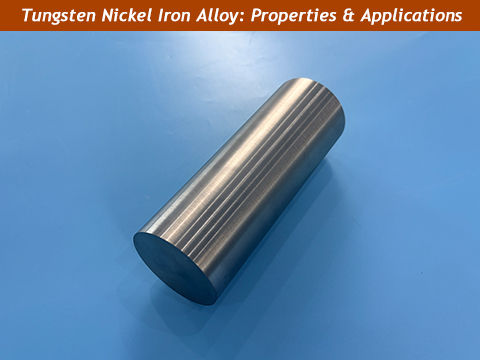
Tungsten nickel iron alloy, also called
W-Ni-Fe, WNiFe, or WNFe, is a type of tungsten heavy alloy made mainly from tungsten, nickel, and iron. Tungsten provides the alloy with its high density and strength, while nickel and iron form a binder phase that improves toughness and machinability.
Most W-Ni-Fe alloys contain about
90–97% tungsten. The remaining portion is mainly nickel and iron. In general, more tungsten means higher density and hardness, while lower tungsten content can provide better ductility and easier machining.
W-Ni-Fe is widely used because it combines
very high density, good strength, toughness, and radiation shielding performance. These properties make it suitable for counterweights, balancing components, radiation shielding parts, and other applications where high mass is needed in a compact space.
Compared with pure tungsten, W-Ni-Fe is easier to process because of its nickel-iron binder phase. However, the best grade depends on the required density, mechanical properties, dimensions, and application.
Tungsten Nickel Iron Alloy Composition
The composition of tungsten nickel iron alloy directly affects its density, strength, hardness, and ductility. Tungsten is the main component, while nickel and iron form the binder phase.
Tungsten Content
W-Ni-Fe alloys commonly contain about
90–97% tungsten. As tungsten content increases, the alloy generally becomes denser and harder.
For example, a 97% tungsten alloy will usually have a higher density than a 90% tungsten alloy. However, higher tungsten content can also reduce ductility and make machining more demanding.
Nickel and Iron Binder
Nickel and iron work together as the binder phase between the tungsten particles. This binder gives the alloy better toughness and ductility than pure tungsten.
The
Ni/Fe ratio can also affect the alloy's mechanical properties and processing behavior. Different ratios may be used to achieve a suitable balance of strength, toughness, and machinability for a specific application.
Common W-Ni-Fe Grades
Some commonly used grades include
90W, 93W, 95W, and 97W. The numbers generally indicate the approximate tungsten content.
|
Grade |
Approx. Tungsten Content |
General Characteristics |
|
90W |
90% |
Good ductility and machinability |
|
93W |
93% |
Good balance of density and mechanical properties |
|
95W |
95% |
High density with good overall performance |
|
97W |
97% |
Very high density and hardness |
These are general trends rather than fixed performance values. The actual properties of a W-Ni-Fe alloy also depend on its composition, density, manufacturing process, and heat treatment.
Key Properties of Tungsten Nickel Iron Alloy
Tungsten nickel iron alloy is widely used because it combines the
high density of tungsten with the improved
toughness and machinability provided by the nickel-iron binder phase. By adjusting the tungsten content and alloy composition, W-Ni-Fe alloys can achieve different balances of density, strength, and ductility for specific applications.
High Density
High density is one of the most important advantages of W-Ni-Fe alloy. Since tungsten makes up the majority of the alloy, these materials can provide a large amount of mass in a relatively small volume.
This makes tungsten nickel iron alloy suitable for applications where space is limited but high weight is required, including
counterweights, balancing components, and radiation shielding parts.
High Strength and Hardness
The tungsten phase provides excellent strength and hardness, allowing W-Ni-Fe alloy components to maintain structural stability under high mechanical loads.
Compared with pure tungsten, the nickel-iron binder phase improves toughness and helps reduce brittleness. This gives W-Ni-Fe a better balance of strength and impact resistance for engineering applications.
Good Toughness and Machinability
Although pure tungsten has outstanding density and hardness, its brittleness makes it difficult to manufacture into complex shapes. The addition of nickel and iron improves the alloy's ductility and makes it easier to machine.
However, machinability depends on the tungsten content. Higher tungsten grades usually provide greater density and hardness but may require more advanced machining processes.
Low Thermal Expansion
W-Ni-Fe alloy has a relatively low coefficient of thermal expansion compared with many conventional metals. This allows components to maintain better dimensional stability when exposed to temperature changes.
This property is valuable in precision applications where maintaining accurate dimensions is important.
Radiation Shielding Capability
Due to its high density and high tungsten content, W-Ni-Fe alloy provides effective shielding against X-rays and gamma rays.
Its ability to deliver strong shielding performance in a compact size makes it suitable for applications such as
medical radiation equipment, nuclear-related components, and scientific research systems.
Overall, tungsten nickel iron alloy offers a unique combination of
high density, mechanical strength, toughness, and processing flexibility. These properties make it an excellent choice for applications that require more durability and manufacturability than pure tungsten can provide.
How Does Tungsten Content Affect W-Ni-Fe Alloy Performance?
Tungsten content is one of the most important factors affecting the performance of tungsten nickel iron alloy. Since tungsten provides the alloy with its high density and hardness, increasing the tungsten percentage generally improves these properties. However, higher tungsten content can also reduce ductility and make machining more challenging.
Higher Tungsten Content: More Density and Hardness
As tungsten content increases, the density of W-Ni-Fe alloy generally becomes higher. This makes high-tungsten grades suitable for applications where maximum weight is required in a limited space.
Higher tungsten content also improves hardness and wear resistance, which can be beneficial for demanding mechanical applications. However, because the amount of nickel-iron binder phase decreases, the alloy may become less ductile and more difficult to process.
Lower Tungsten Content: Better Ductility and Machinability
W-Ni-Fe alloys with lower tungsten content contain a higher proportion of nickel-iron binder phase. This usually provides better toughness, ductility, and machining performance.
These grades can be a better choice when the component requires more complex shapes, easier processing, or improved resistance to mechanical impact.
How to Choose the Right Tungsten Content
The right tungsten content depends on the application requirements. Higher tungsten content provides higher density and hardness, while lower tungsten content offers better ductility and easier machining.
For applications that need maximum weight in a small space, such as radiation shielding or counterweights, a higher tungsten grade may be a better choice. For components that require easier processing or better toughness, a lower tungsten grade may be more suitable.
The best W-Ni-Fe alloy should provide the right balance between
density, strength, toughness, and machinability for the specific application.
In practice, tungsten content should be selected based on the overall performance requirements rather than simply choosing the highest possible tungsten percentage. A properly balanced W-Ni-Fe composition can provide the best combination of density, strength, and manufacturing flexibility.
Applications of Tungsten Nickel Iron Alloy
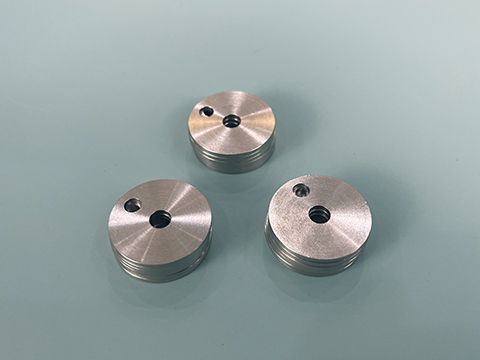
Tungsten nickel iron alloy is mainly used in applications that need high weight in a small space, good strength, and reliable performance. Compared with pure tungsten, W-Ni-Fe alloy is easier to manufacture and machine, making it more practical for industrial use.
Counterweights and Balancing Parts
Because of its very high density, tungsten nickel iron alloy is often used to make counterweights and balancing parts.
It can provide the required weight while keeping the component size small. This makes it useful in applications such as aerospace parts, industrial equipment, and precision balancing systems.
Radiation Shielding Parts
Tungsten nickel iron alloy has excellent radiation shielding performance because of its high tungsten content and density.
It is commonly used for X-ray and gamma-ray shielding components in medical equipment, radiation protection systems, and research facilities. Its high density allows manufacturers to achieve effective shielding with a smaller part size.
Aerospace and Industrial Components
W-Ni-Fe alloy is also used for specialized components that require high density and good mechanical strength.
Typical applications include inertial components, vibration control parts, and high-density fixtures. Its strength and durability help these parts maintain stable performance during operation.
Precision and Custom Components
The good combination of density, strength, and machinability makes tungsten nickel iron alloy suitable for custom-shaped components.
Compared with pure tungsten, W-Ni-Fe alloy can be more easily processed into complex designs while still maintaining excellent weight and mechanical properties.
Overall, tungsten nickel iron alloy is a practical choice for applications where high density, compact size, and reliable mechanical performance are required. The best alloy grade depends on the specific needs of each application.
How Is Tungsten Nickel Iron Alloy Made?
Tungsten nickel iron alloy is mainly produced through
powder metallurgy, which is widely used because it can achieve high density and good material consistency.
Powder Mixing
The manufacturing process starts with tungsten, nickel, and iron powders. These powders are carefully measured and mixed according to the required alloy composition.
A uniform powder mixture is important because it helps ensure consistent density and mechanical properties throughout the final product.
Compaction
After mixing, the metal powders are pressed into the desired shape using a molding process. This step creates a compacted part, also called a green compact, with sufficient strength for further processing.
Sintering
The compacted part is then heated in a controlled atmosphere to a high temperature below the melting point of tungsten. During sintering, the nickel and iron binder phase becomes liquid and helps bond the tungsten particles together.
This process increases the density and strength of the alloy while reducing internal pores.
Machining and Finishing
After sintering, W-Ni-Fe alloy components can be machined to achieve the required dimensions and surface finish.
Since tungsten nickel iron alloy is a high-density material with high hardness, proper machining methods and tools are required, especially for high-tungsten grades.
Quality Inspection
The final products are inspected to ensure they meet application requirements. Common checks include
chemical composition, density, dimensions, mechanical properties, and surface quality.
Through controlled powder metallurgy and processing, manufacturers can produce tungsten nickel iron alloy components with consistent performance for demanding industrial applications.
How to Choose the Right W-Ni-Fe Alloy
Choosing the right tungsten nickel iron alloy depends on the requirements of the final application. Different grades offer different balances of density, strength, toughness, and machinability.
Consider the Required Density
Density is usually the first factor to consider when selecting W-Ni-Fe alloy.
If the application requires maximum weight in a limited space, a higher tungsten content grade may be preferred. For example, high-density grades are often used for compact counterweights and radiation shielding components.
Consider Mechanical Requirements
The required strength, hardness, and toughness also affect the choice of alloy grade.
Higher tungsten content generally provides higher density and hardness, while lower tungsten content usually offers better ductility and easier processing. The right balance depends on the working conditions of the component.
Consider Machining Requirements
The shape and complexity of the component should also be considered.
Higher tungsten grades can be more challenging to machine because of their increased hardness. If the part requires complex machining or tight tolerances, a grade with better machinability may be more suitable.
Consider Component Size and Design
The size, shape, and dimensional requirements of the component can influence material selection.
For custom W-Ni-Fe parts, factors such as machining allowance, surface finish, and production method should be considered during the material selection process.
Choose Based on the Application
The best W-Ni-Fe alloy is not simply the one with the highest tungsten content. A suitable grade should provide the right combination of
density, strength, toughness, and machinability for the specific application.
Working with an experienced
tungsten heavy alloy supplier can help ensure the selected material meets both performance requirements and manufacturing needs.
Conclusion
Tungsten nickel iron alloy is not simply a material with high density. Its real value comes from the balance between
weight, strength, and manufacturability.
While higher tungsten content can provide more density, the best alloy is not always the one with the highest tungsten percentage. The right W-Ni-Fe grade depends on what the component needs to achieve, whether it is compact weight, mechanical durability, radiation protection, or easier processing.
By choosing the right composition and manufacturing approach, tungsten nickel iron alloy can provide a practical solution for applications where traditional metals are not enough.
Need a tungsten nickel iron alloy solution for your project?
Contact us to discuss available grades, custom sizes, and material requirements.