Titanium Grade 12: Properties, Applications, and Material Guide
views, Updated: August 18, 2026 by aemmetal
Introduction: Why Engineers Choose Grade 12 Titanium
Titanium Grade 12, also called
Grade 12 titanium or
Ti-0.3Mo-0.8Ni, is a corrosion-resistant titanium alloy designed for challenging industrial environments. It improves the performance of commercially pure titanium by adding small amounts of molybdenum (Mo) and nickel (Ni).
Compared with
Grade 2 titanium, Grade 12 titanium provides higher strength and better resistance to crevice corrosion, especially in chemical and chloride-containing environments. Compared with more expensive titanium-palladium alloys such as Grade 7, it offers a more cost-effective option for many applications.
The main advantage of
Grade 12 titanium alloy is its balanced performance. It combines:
· Excellent corrosion resistance
· Higher strength than commercially pure titanium
· Good weldability and fabrication properties
· Lightweight characteristics of titanium
Because of these advantages,
Grade 12 titanium is widely used in chemical processing equipment, heat exchangers, flue gas desulfurization (FGD) systems, seawater applications, and power generation equipment.
This guide covers the
properties, chemical composition, corrosion resistance, applications, and material selection considerations of Titanium Grade 12 to help engineers and buyers understand where this alloy performs best.
1. What Is Grade 12 Titanium?
Grade 12 titanium is a near-alpha titanium alloy containing small amounts of molybdenum (Mo) and nickel (Ni). Its typical composition is based on
Ti-0.3Mo-0.8Ni, with titanium as the balance element.
Unlike commercially pure titanium grades, Grade 12 titanium is strengthened through alloying additions while maintaining the lightweight and corrosion-resistant characteristics of titanium. It is classified as a corrosion-resistant titanium alloy rather than a high-strength structural alloy.
The alloy is covered by several material standards, including:
·
ASTM B265 — Titanium and titanium alloy sheet and plate
·
ASTM B337 — Titanium and titanium alloy seamless and welded tubes
·
ASTM B338 — Titanium and titanium alloy tubes for condensers and heat exchangers
From a metallurgical perspective, Grade 12 titanium contains a mainly alpha-phase structure with a small amount of retained beta phase. The addition of molybdenum and nickel modifies the alloy structure and improves its overall performance compared with commercially pure titanium.
In simple terms, Grade 12 titanium can be considered an upgraded version of commercially pure titanium, designed for applications that require a stronger and more corrosion-resistant titanium material.
2. Chemical Composition of Grade 12 Titanium Alloy
The performance of
Grade 12 titanium comes from the addition of small amounts of molybdenum (Mo) and nickel (Ni). These alloying elements improve the strength and corrosion resistance of titanium while keeping its excellent lightweight characteristics.
According to standards such as
ASTM B265, ASTM B337, and ASTM B338, the typical chemical composition of
Titanium Grade 12 alloy is shown below:
|
Element |
Content (wt.%) |
|
Titanium (Ti) |
Balance |
|
Molybdenum (Mo) |
0.2–0.4% |
|
Nickel (Ni) |
0.6–0.9% |
|
Iron (Fe) |
≤0.30% |
|
Oxygen (O) |
≤0.25% |
|
Carbon (C) |
≤0.08% |
|
Nitrogen (N) |
≤0.03% |
|
Hydrogen (H) |
≤0.015% |
Role of Molybdenum and Nickel in Grade 12 Titanium
Although the alloying content is relatively low, molybdenum and nickel have an important influence on the performance of
Grade 12 titanium alloy.
Molybdenum (Mo): Improving Strength and Corrosion Resistance
Molybdenum is a key alloying element in Grade 12 titanium. It helps:
· Increase the strength of the titanium matrix through solid solution strengthening
· Improve resistance to reducing acids
· Enhance resistance to localized corrosion, especially crevice corrosion
This makes Grade 12 titanium more suitable than commercially pure titanium in chemical environments where corrosion conditions are more demanding.
Nickel (Ni): Enhancing Alloy Strength and Stability
Nickel contributes to both mechanical and corrosion performance. It helps:
· Improve the strength of the alloy
· Enhance corrosion resistance in certain chemical media
· Support the stability of the protective oxide film on the titanium surface
The combined effect of molybdenum and nickel gives
Grade 12 titanium a balanced performance that cannot be achieved by pure titanium alone.
In simple terms, the alloy design of Grade 12 titanium focuses on improving the weak points of commercially pure titanium while maintaining titanium’s key advantages:
low density, excellent corrosion resistance, and good fabrication performance.
3. Microstructure and Metallurgical Characteristics of Grade 12 Titanium
The properties of
Grade 12 titanium alloy are closely related to its microstructure. Unlike commercially pure titanium, Grade 12 contains molybdenum and nickel, which modify the internal structure of the alloy and improve its overall performance.
Grade 12 titanium is generally classified as a near-alpha titanium alloy. Its microstructure mainly consists of the alpha phase, with a small amount of retained beta phase formed due to the addition of molybdenum.
Effect of Alloying Elements on Microstructure
Molybdenum (Mo) is a beta-stabilizing element in titanium alloys. It slows down the transformation of the beta phase during cooling and allows a small amount of beta phase to remain in the final structure.
This helps improve:
· Strength through solid solution strengthening
· Structural stability at elevated temperatures
· Resistance to deformation during processing
Nickel (Ni) also contributes to alloy strengthening and can interact with titanium to form fine intermetallic phases. These microstructural features help improve the balance between strength and corrosion resistance.
Why Does the Microstructure Matter?
The microstructure of Grade 12 titanium gives it a unique combination of properties:
· Higher strength than commercially pure titanium grades
· Better resistance to localized corrosion
· Good ductility and forming ability
· Reliable performance during welding and fabrication
Unlike high-strength titanium alloys such as
Grade 5 titanium (Ti-6Al-4V), Grade 12 titanium is not designed primarily for maximum strength. Instead, it is optimized for applications where
corrosion resistance, manufacturability, and moderate mechanical strength are all important.
This balanced microstructure is one of the reasons why
Grade 12 titanium alloy is widely used in chemical processing equipment, heat exchangers, and corrosion-resistant industrial components.
4. Physical and Mechanical Properties of Grade 12 Titanium
The performance of
Grade 12 titanium comes from its unique balance of lightweight characteristics, corrosion resistance, and mechanical strength. Compared with commercially pure titanium, Grade 12 offers improved strength while maintaining the advantages of titanium, such as low density and excellent durability.
4.1 Physical Properties of Grade 12 Titanium
The typical physical properties of
Titanium Grade 12 alloy are shown below:
|
Property |
Typical Value |
|
Density |
4.52 g/cm³ |
|
Melting Point |
1640–1680°C |
|
Elastic Modulus |
105–110 GPa |
|
Thermal Conductivity |
14–18 W/(m·K) |
|
Thermal Expansion Coefficient |
8.6–9.0 × 10⁻⁶/K |
|
Electrical Resistivity |
0.45–0.55 μΩ·m |
|
Magnetic Property |
Non-magnetic |
With a density of around
4.52 g/cm³, Grade 12 titanium is much lighter than stainless steel and nickel-based alloys. This lightweight advantage makes it suitable for equipment where reducing weight while maintaining corrosion resistance is important.
Its low thermal conductivity and stable thermal expansion behavior also help maintain dimensional stability in heat exchangers and industrial processing equipment.
4.2 Mechanical Properties of Grade 12 Titanium
The typical room-temperature mechanical properties of annealed
Grade 12 titanium include:
|
Property |
Typical Value |
|
Tensile Strength |
≥540 MPa |
|
Yield Strength (0.2% offset) |
≥410 MPa |
|
Elongation |
≥18% |
|
Reduction of Area |
≥30% |
|
Hardness |
About 220–250 HV |
These values place Grade 12 titanium between commercially pure titanium and high-strength titanium alloys.
Compared with
Grade 2 titanium, Grade 12 provides significantly higher strength:
· Grade 2 titanium tensile strength: about 345 MPa
· Grade 12 titanium tensile strength: typically 540 MPa or higher
At the same time, Grade 12 maintains good ductility, making it easier to form and weld compared with many high-strength titanium alloys.
4.3 Balance Between Strength and Fabrication Performance
One of the main advantages of
Grade 12 titanium alloy is its balanced mechanical performance.
It provides:
· Higher strength than pure titanium grades
· Better ductility than many high-strength titanium alloys
· Good weldability and fabrication capability
This balance makes Grade 12 titanium suitable for applications such as:
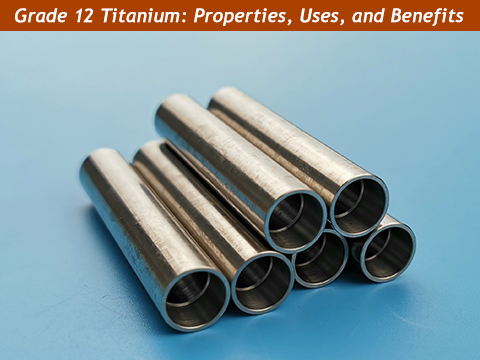
· Thin-wall heat exchanger tubes
· Chemical processing equipment
· Corrosion-resistant pressure components
· Marine equipment
In engineering applications, Grade 12 titanium is often selected not because it has the highest strength, but because it provides the right combination of
strength, corrosion resistance, lightweight design, and manufacturing flexibility.
5. Corrosion Resistance of Grade 12 Titanium
Excellent corrosion resistance is one of the main reasons engineers choose
Grade 12 titanium. Compared with commercially pure titanium, the addition of molybdenum (Mo) and nickel (Ni) improves its performance in more demanding environments, especially where
crevice corrosion and reducing acids are concerns.
5.1 Better Resistance to Chemical Environments
Grade 12 titanium performs well in:
· Dilute hydrochloric acid (HCl)
· Sulfuric acid (H₂SO₄)
· Phosphoric acid (H₃PO₄)
· Chloride-containing solutions
· Seawater and saltwater environments
Compared with
Grade 2 titanium, Grade 12 offers improved resistance to localized corrosion, making it suitable for chemical processing equipment and heat exchangers.
5.2 Improved Crevice Corrosion Resistance
Crevice corrosion is a common concern in components with narrow gaps, such as:
· Heat exchanger tubes
· Gaskets and joints
· Piping connections
The molybdenum addition helps stabilize the protective oxide layer on the titanium surface, allowing
Grade 12 titanium alloy to perform better than commercially pure titanium in chloride and acidic environments.
5.3 Corrosion Limitations
Although Grade 12 titanium provides excellent corrosion resistance, it is not suitable for extreme environments such as:
· Hydrofluoric acid (HF)
· Dry chlorine gas
· Highly concentrated hot acids
For these conditions, more specialized materials such as tantalum, zirconium, or nickel-based alloys may be required.
Overall,
Grade 12 titanium offers a strong balance of corrosion resistance, mechanical performance, and cost efficiency, making it a practical choice for many industrial applications.
6. Applications of Grade 12 Titanium
The combination of
corrosion resistance, moderate strength, and good fabrication performance makes
Grade 12 titanium suitable for many industrial applications. It is especially valuable in environments where Grade 2 titanium does not provide enough performance, but more expensive alloys are unnecessary.
6.1 Flue Gas Desulfurization (FGD) Systems
One of the most important applications of
Grade 12 titanium alloy is in
flue gas desulfurization (FGD) equipment used in power plants and industrial facilities.
Common components include:
· Heat exchanger tubes
· Absorber components
· Spray pipes
· Pump parts
· Internal structures
FGD systems often contain acidic chloride-containing slurry, which can cause corrosion problems for stainless steel and conventional metals. Grade 12 titanium provides reliable corrosion resistance and longer service life in these conditions.
6.2 Chemical Processing Equipment
It is widely used in chemical industries for equipment exposed to corrosive media, including:
· Heat exchangers
· Reactors
· Storage tanks
· Piping systems
· Condensers
Its resistance to acids such as hydrochloric acid, sulfuric acid, and phosphoric acid makes it suitable for many chemical processing environments.
6.3 Marine and Seawater Applications
Because of its excellent resistance to chloride corrosion,
Grade 12 titanium is also used in marine applications, such as:
· Seawater heat exchangers
· Desalination equipment
· Cooling systems
· Offshore components
Compared with stainless steel, titanium alloys provide much better resistance to seawater corrosion and require less maintenance over long service periods.
6.4 Power Generation Equipment
In power plants, they can be used for:
· Condenser tubes
· Cooling system components
· Heat transfer equipment
Its lightweight design and corrosion resistance help improve equipment reliability and reduce maintenance requirements.
6.5 Oil and Gas Applications
In oil and gas processing, this titanium alloy can be selected for components exposed to corrosive environments, including:
· Process equipment
· Heat exchangers
· Corrosion-resistant piping systems
Its combination of strength and corrosion resistance makes it suitable for applications where both durability and weight reduction are important.
Overall,
Grade 12 titanium is mainly chosen for corrosion-resistant industrial equipment. It provides a practical solution between commercially pure titanium and higher-cost alloys, offering reliable performance in chemical, marine, and energy applications.
7. Grade 12 Titanium vs Other Titanium Grades
Choosing the right titanium grade depends on the balance between
corrosion resistance, strength, fabrication requirements, and cost. Compared with other common titanium grades,
Grade 12 titanium provides a unique combination of performance and value.
7.1 Grade 12 Titanium vs Grade 2 Titanium
Grade 2 titanium is the most widely used commercially pure titanium grade. It offers excellent corrosion resistance and good formability, but its strength is lower than Grade 12 titanium.
|
Feature |
Grade 12 Titanium |
Grade 2 Titanium |
|
Alloy Type |
Ti-Mo-Ni alloy |
Commercially pure titanium |
|
Strength |
Higher |
Lower |
|
Crevice Corrosion Resistance |
Better |
Moderate |
|
Formability |
Good |
Excellent |
|
Cost |
Higher |
Lower |
When to choose Grade 12:For applications involving acidic solutions, chloride environments, higher temperatures, or crevice corrosion risks, Grade 12 titanium is usually a better choice.
When to choose Grade 2:For general seawater, atmospheric, and mildly corrosive environments where cost efficiency is the priority.
7.2 Grade 12 Titanium vs Grade 7 Titanium
Grade 7 titanium contains palladium (Pd), which provides excellent corrosion resistance, especially in severe reducing acid environments.
|
Feature |
Grade 12 Titanium |
Grade 7 Titanium |
|
Main Alloying Elements |
Mo + Ni |
Pd |
|
Corrosion Resistance |
Excellent |
Superior |
|
Strength |
Higher |
Similar to Grade 2 |
|
Material Cost |
Lower |
Higher |
Grade 7 titanium is preferred for extremely aggressive chemical environments, while
Grade 12 titanium offers a more economical solution for many medium-corrosion applications.
7.3 Grade 12 Titanium vs Grade 5 Titanium
Grade 5 titanium (Ti-6Al-4V) is one of the strongest and most widely used titanium alloys, especially in aerospace and structural applications.
|
Feature |
Grade 12 Titanium |
Grade 5 Titanium |
|
Main Advantage |
Corrosion resistance |
High strength |
|
Tensile Strength |
≥540 MPa |
≥895 MPa |
|
Weldability |
Better |
More challenging |
|
Typical Use |
Chemical and marine equipment |
Aerospace and load-bearing parts |
Choose Grade 12 titanium when corrosion resistance and fabrication are more important. Choose Grade 5 titanium when maximum strength is the primary requirement.
7.4 Grade 12 Titanium vs Nickel-Based Alloys
Nickel-based alloys, such as Hastelloy, provide excellent corrosion resistance in extreme chemical environments but are heavier and more expensive.
|
Feature |
Grade 12 Titanium |
Nickel-Based Alloys |
|
Density |
About 4.52 g/cm³ |
About 8–9 g/cm³ |
|
Weight |
Lightweight |
Heavier |
|
Cost |
Generally lower |
Higher |
|
Corrosion Resistance |
Excellent |
Excellent to superior |
For moderate corrosive environments,
Grade 12 titanium can provide a lightweight and cost-effective alternative to nickel-based alloys.
8. Conclusion: Why Choose Grade 12 Titanium?
Grade 12 titanium is a versatile titanium alloy that provides a good balance of corrosion resistance, strength, and cost.
Compared with Grade 2 titanium, it offers higher strength and better resistance to crevice corrosion. Compared with more expensive alloys such as Grade 7 titanium, it provides a more economical solution for many industrial applications.
The main advantage of Grade 12 titanium alloy is its balanced performance. It is not designed to be the strongest titanium alloy or the most corrosion-resistant material. Instead, it provides reliable performance where both durability and cost matter.
With its excellent corrosion resistance, good weldability, and moderate strength, Grade 12 titanium is widely used in chemical processing, heat exchangers, FGD systems, marine equipment, and power generation applications.
For engineers looking for a material that performs better than commercially pure titanium without the higher cost of premium alloys, Grade 12 titanium is often a practical and reliable choice.