Tantalum Grades Explained: Properties, Types, and Industrial Uses
views, Updated: June 26, 2026 by aemmetal
Introduction to Tantalum Grades
Tantalum is widely used in industries where materials must work under strong chemicals, high temperatures, or demanding conditions. You can find it in chemical equipment, electronic parts, medical devices, and aerospace components.
“Tantalum grades” simply means different quality levels of tantalum metal. These grades are mainly based on how pure the material is and how much impurity it contains. Even small amounts of elements like oxygen, nitrogen, or hydrogen can change how the metal behaves during processing and use.
In general, higher grades mean higher purity and better workability, while standard grades are more cost-effective and still suitable for many industrial uses. Choosing the right grade helps engineers balance performance and cost, instead of always selecting the most expensive option.
This is important because different applications need different material performance. For example, chemical equipment may require excellent corrosion resistance, while electronic parts may focus more on stability and conductivity.
In the next sections, we will explain the main types of tantalum grades, their key properties, and where each grade is commonly used in industry.
What Are Tantalum Grades?
“Tantalum grades” are standardized material categories used to identify different levels of quality and processing characteristics in Tantalum. Instead of describing the metal only by name, the grade system provides a clear technical code that helps define how the material should be produced, tested, and used.
In industrial practice, these grades are mainly used to ensure consistency between suppliers and end users. When a buyer specifies a certain grade, they are not just referring to composition—they are also setting expectations for mechanical behavior, fabrication performance, and compliance with industry standards such as ASTM.
Most tantalum grades are built around controlled limits of impurities and structural quality. These differences may seem small on paper, but they directly affect how the material performs during real processing steps like rolling, welding, or deep forming.
From a technical perspective, grading helps separate materials into categories based on:
-
Chemical compliance (controlled impurity thresholds)
-
Manufacturing stability (how predictable the material behaves during processing)
-
Application suitability (whether it fits chemical, electronic, or high-temperature use cases)
This system allows engineers to avoid trial-and-error in material selection and instead rely on clearly defined performance levels.
Main Types of Tantalum Grades
The grading of Tantalum is mainly based on three factors: purity level, processing method, and alloying elements. In industrial practice, the most widely used system follows ASTM standards, which classify tantalum into commercial pure grades, medical grades, alloy grades, and purity-based grades.
Commercially Pure Tantalum (Unalloyed Tantalum)
Commercial pure tantalum is the most common industrial category. It is further divided into two UNS (Unified Numbering System) grades based on manufacturing method:
R05200 (Melted Grade Tantalum)
-
Produced by electron beam (EB) melting or vacuum arc remelting (VAR)
-
Very low impurity content and high purity level
-
Excellent ductility and corrosion resistance
-
Easy to form, roll, and deep draw
Typical applications:
-
Chemical processing equipment
-
Deep-drawn components
-
Medical implant structures
-
High-performance corrosion-resistant parts
R05400 (Powder Metallurgy Grade Tantalum)
-
Produced by powder metallurgy (pressing and sintering)
-
High purity but slightly different mechanical behavior compared to melted grade
-
Better suited for controlled shapes and specific engineering parts
-
Good balance of strength and manufacturability
Typical applications:
-
Electronic capacitors
-
Precision mechanical components
-
Specialized industrial parts
Medical Grade Tantalum
Medical-grade tantalum is designed for applications where biocompatibility and ultra-low impurity control are critical.
-
Based on R05200 and R05400 grades
-
Must comply with medical standards such as:
-
Ensures safe long-term use inside the human body
Typical applications:
-
Orthopedic implants
-
Surgical clips and markers
-
Tissue reinforcement and fixation devices
-
Medical imaging markers
Tantalum Alloy Grades
To improve performance under extreme conditions, tantalum is alloyed with elements such as tungsten (W) and niobium (Nb). These additions improve strength, heat resistance, and stability during long-term use.
Tantalum Tungsten Alloy is designed for high-temperature environments. It keeps good strength even when exposed to extreme heat, which makes it suitable for aerospace parts and other high-stress structural applications.
Tantalum Niobium Alloy focuses more on corrosion resistance and toughness. It performs well in strong chemical environments, making it a good choice for chemical processing equipment that works with aggressive acids or corrosive media.
R05252 (Ta-2.5W)
-
Contains ~2.5% tungsten
-
Improved high-temperature strength and creep resistance
-
Suitable for moderate extreme environments
R05255 (Ta-10W)
-
Contains ~10% tungsten
-
Very high strength and wear resistance
-
Used in aerospace and high-thermal-load components
R05240 (Ta-40Nb)
-
Contains ~40% niobium
-
Excellent resistance to strong acids
-
Widely used in chemical processing equipment
ASTM Standards for Tantalum Materials
For industrial materials like Tantalum, ASTM standards provide a unified technical framework that defines chemical composition, mechanical properties, product forms, and testing methods. These standards ensure that tantalum materials from different suppliers remain consistent in performance and suitable for global engineering use.
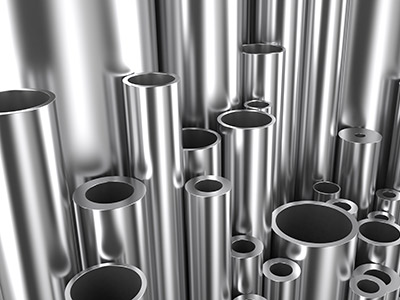
ASTM B708 – Sheet, Plate, and Strip
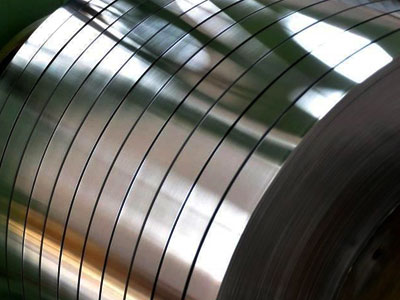
ASTM B708 is one of the most commonly used standards for tantalum flat products such as sheets, plates, and strips. It defines requirements for chemical composition, mechanical properties, dimensional tolerances, and surface quality. This standard is widely applied in chemical equipment, heat exchangers, and industrial fabrication, where corrosion resistance and formability are critical.
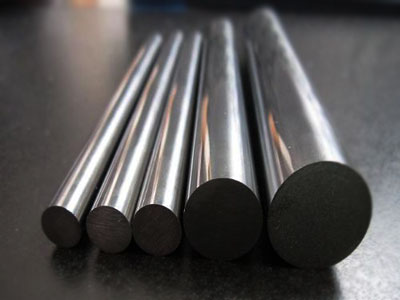
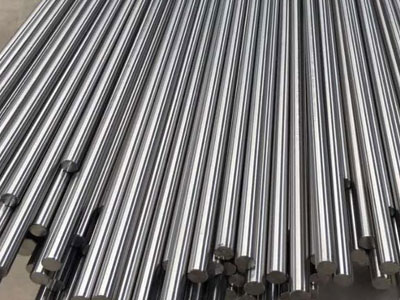
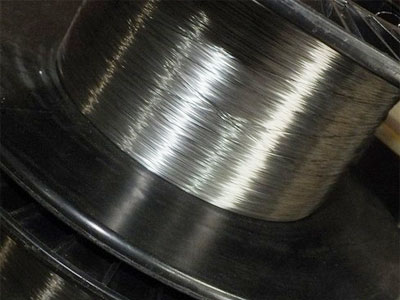
ASTM B365 – Tantalum Rod and Wire
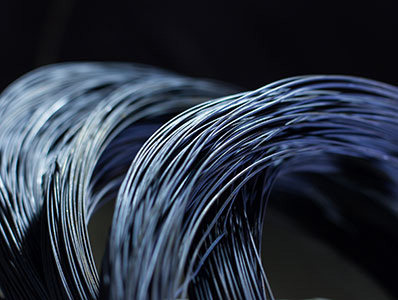
ASTM B365 covers tantalum rod, wire, and related semi-finished products. It specifies material purity, mechanical performance, and processing requirements for products used in machining, fastening, and electrical applications. This standard is especially important for components that require good strength combined with excellent corrosion resistance.
ASTM B521 – Forging Standards
ASTM B521 covers tantalum and tantalum alloy forgings, including forged bars, rings, and structural components. This standard defines requirements for chemical composition, mechanical properties, and internal soundness of forged products.
Forged tantalum materials are commonly used in applications that require higher structural strength and reliability, such as aerospace components, high-pressure systems, and specialized industrial parts.
ASTM F560 – Medical Grade Tantalum
ASTM F560 is used for tantalum materials intended for surgical and medical implant applications. Compared with general industrial standards, it has stricter control on impurities and focuses heavily on biocompatibility. This ensures the material can be safely used inside the human body for long-term applications such as orthopedic implants and surgical markers.
ASTM Standards in Quality Control
Beyond product-specific specifications, ASTM standards also define how tantalum should be tested and verified. These include chemical analysis methods, mechanical testing procedures, and acceptance criteria for inspection. By following these standardized methods, manufacturers can ensure that each batch of material meets consistent and predictable performance requirements.
Why ASTM Standards Matter
In real-world applications, ASTM standards act as a common technical language between buyers and suppliers. They reduce ambiguity in material selection, improve traceability, and ensure that tantalum products perform reliably in demanding environments such as chemical processing, aerospace systems, and precision engineering.
Industrial Applications of Tantalum Materials
The applications of Tantalum are mainly driven by its ability to perform reliably in harsh chemical, thermal, and mechanical conditions. Instead of being limited to one industry, it is widely used across chemical processing, electronics, medical, aerospace, and advanced manufacturing sectors.
Chemical Processing Equipment
One of the largest uses of tantalum is in chemical processing environments where strong acids are involved. It performs extremely well in corrosive media such as hydrochloric acid and nitric acid, even at elevated temperatures.
Because of this stability, it is commonly used in heat exchangers, reactor linings, valves, and piping systems. In these applications, material failure is not acceptable, so corrosion resistance is the key selection factor.
Electronics and Energy Storage
Tantalum is widely used in electronic components, especially capacitors. Its stable electrical behavior and reliable performance make it suitable for compact and high-performance electronic devices.
In this field, material consistency is more important than mechanical strength. Powder metallurgy tantalum is often used because it provides stable structure and controlled production behavior, which is important for capacitor manufacturing.
Aerospace and High-Temperature Systems
In aerospace and other high-temperature environments, tantalum is often used in alloy form. Pure tantalum maintains stability at very high temperatures, but alloyed materials offer better resistance to deformation and mechanical stress.
Tantalum-tungsten alloys are commonly used in components exposed to extreme heat and structural loading, such as engine parts and thermal protection systems.
Medical and Biomedical Applications
Tantalum is also widely used in medical applications due to its excellent biocompatibility. It can remain stable inside the human body without causing adverse reactions.
It is commonly used in orthopedic implants, bone repair materials, surgical markers, and other implantable devices where long-term reliability is required. Both high-purity and standard grades can be used depending on the application requirements.
Semiconductor and Thin Film Applications
In advanced electronics manufacturing, high-purity tantalum is used in sputtering targets and thin film deposition processes. These applications require extremely stable material composition to ensure uniform coating quality and consistent device performance.
Because of its purity and stability, tantalum plays an important role in semiconductor fabrication and precision coating technologies.
Conclusion
Tantalum is a material that exhibits different properties depending on its grade, purity, and manufacturing process. In simple terms, the grade tells you what the material can realistically handle in actual use.
Different tantalum grades are designed for different jobs. Some are better for strong acid environments, some are easier to shape into complex parts, and others are designed for higher strength or special electronic applications. There is no “best grade,” only the “right grade” for a specific working condition.
In real projects, problems usually happen when the material is over-specified or under-specified. For example, choosing a higher-grade material than needed increases cost without real benefit, while choosing a lower-grade material can lead to processing issues or shorter service life. The correct choice is always based on the actual working environment, not the name of the material.
For stable supply and custom specifications, AEM Metal can provide
tailored tantalum materials based on your application needs, helping ensure both performance and cost efficiency.