Titanium Alloy Buying Guide: Types, Grades, and How to Choose
views, Updated: November 12, 2026 by aemmetal
A
titanium alloy combines titanium with elements such as aluminum, vanadium, or niobium to achieve specific properties. The right alloy depends on the demands of the application. For a lightweight structural component, strength relative to weight may be the priority. For chemical processing equipment, corrosion resistance depends on the fluid, its concentration, and the operating temperature.
Once you’ve selected an alloy, specify the
grade or composition, applicable material standard, product form, and delivery condition. For example, an inquiry for Grade 5 titanium plate should include the required dimensions and tolerances, along with any specified condition, such as annealed. These details give suppliers a common basis for quoting.
This guide explains how the main
types and grades of titanium alloys differ, from Ti-6Al-4V to titanium-niobium alloys and nickel-titanium (Nitinol). It also shows how to match an alloy to your application and prepare a clear purchase specification.
What Is a Titanium Alloy?
A
titanium alloy is a material in which titanium is combined with other elements in controlled amounts. The difference from commercially pure (CP) titanium is the role of those elements. CP titanium grades are defined in part by limits on elements such as oxygen and iron. In titanium alloys, additions such as aluminum, vanadium, or molybdenum are used to achieve particular properties or change how the material responds to processing.
Ti-6Al-4V is a common example. Its name indicates nominal contents of 6% aluminum and 4% vanadium by weight.
Grade 5 is the designation used for this alloy in specifications that cover the grade. The composition name tells you the basic chemistry. The applicable material specification sets the exact limits and requirements for the product you purchase.
Alpha, Near-Alpha, Alpha-Beta, and Beta Titanium Alloys
Alpha (α) and
beta (β) are two crystal structures that titanium can form. Alloy composition and processing affect which phases are present and in what proportions. These differences help explain why titanium alloys respond differently to forming and heat treatment.
|
Alloy type |
Example |
Why it matters to buyers |
|
Alpha |
Ti-5Al-2.5Sn |
Generally has limited potential for strengthening by heat treatment. |
|
Near-alpha |
Ti-6Al-2Sn-4Zr-2Mo |
Often considered when a component must retain strength during extended service at elevated temperatures. |
|
Alpha-beta |
Ti-6Al-4V |
Can be supplied in different heat-treated conditions, depending on the product form and specification. |
|
Beta |
Ti-10V-2Fe-3Al, a metastable beta alloy |
Can be strengthened through aging. The specified heat treatment matters when purchasing it for high-strength applications. |
These groups help you understand how an alloy behaves. When purchasing material, use the
exact grade or alloy designation and the
required delivery condition to identify what the supplier should provide.
Common Titanium Alloy Families and Grades
Titanium alloy families group materials by their main alloying elements. Each family can include several compositions with different properties. For purchasing, the
exact grade or alloy designation identifies the material you need. The examples below show how those differences affect material selection.
Titanium-Aluminum-Vanadium Alloys
Grade 5 (Ti-6Al-4V) and
Grade 23 (Ti-6Al-4V ELI) both contain nominally 6% aluminum and 4% vanadium by weight. The main chemistry difference is that Grade 23 has tighter limits on interstitial elements such as oxygen.
ELI stands for
extra-low interstitial. If your drawing calls for Grade 23, include the grade, ELI designation, and applicable material specification in the purchase inquiry.
Grade 9 (Ti-3Al-2.5V) contains nominally 3% aluminum and 2.5% vanadium. Its combination of strength, cold formability, and weldability makes it a practical choice for applications such as hydraulic tubing. This is where product form can guide the choice. If a thin-wall tube needs to be bent during fabrication, check the tubing specification, wall thickness, and delivery condition when evaluating Grade 9.
Titanium-Niobium Alloys
A
titanium-niobium alloy can refer to a binary
Ti-Nb composition, with titanium and niobium as the two principal elements. It can also refer more broadly to alloys such as
Ti-6Al-7Nb, which contains aluminum, or
Ti-13Nb-13Zr, which contains zirconium. These are distinct compositions with their own material requirements.
For a binary Ti-Nb alloy, specify the target niobium content and whether it is given in
weight percent (wt%) or
atomic percent (at%). If your drawing names an alloy such as Ti-6Al-7Nb, provide the full designation and the applicable material specification.
Titanium-Palladium, Titanium-Molybdenum, and Titanium-Zirconium Alloys
The selection criteria depend on what the added elements are intended to achieve. For Grade 7 and Grade 12, the service environment is central to the decision. For Ti-15Mo and Ti-15Mo-5Zr-3Al, stiffness, strength, and material condition are useful comparison points.
|
Alloy designation |
When to evaluate it |
|
Grade 7 (UNS R52400), palladium-bearing titanium |
When crevice corrosion is a concern in chemical processing equipment. Evaluate it against the actual fluid, concentration, and temperature. |
|
Grade 12 (UNS R53400), Ti-0.3Mo-0.8Ni |
When welded process equipment needs a combination of corrosion resistance and higher strength than commercially pure Grade 2. |
|
Ti-15Mo, titanium-molybdenum |
When a design calls for a beta titanium alloy with lower stiffness than Ti-6Al-4V. Compare properties in the condition you intend to purchase. |
|
Ti-15Mo-5Zr-3Al, titanium-molybdenum-zirconium-aluminum |
When the design calls for a lower-stiffness beta alloy and the strength requirement makes the choice of delivery condition important. Compare solution-treated and aged properties against the design requirements. |
Nickel-Titanium Alloy (Nitinol)
Nitinol, also known as
NiTi, is a nickel-titanium alloy that can recover its shape in two ways. With
shape memory, a deformed part returns toward its preset shape as it is heated through its transformation range. With
superelasticity, the part recovers much of its deformation when the load is removed at a suitable operating temperature.
When purchasing Nitinol, describe how the part should recover its shape and the temperature range in which it will operate. If the design specifies an
austenite finish temperature (Af), include the target value or acceptable range. Also state the required product form and dimensions. See the
AEM Metal Nitinol alloys page for available forms and specifications.
How to Choose a Titanium Alloy for Your Application
To choose a
titanium alloy, identify the requirement that will have the greatest effect on material selection. For a structural part, that might be the load it must carry within a weight limit. For a heat exchanger, it might be the process fluid and operating temperature. Start with the drawing if it specifies a grade. If the material choice is still open, use the following criteria to narrow your options.
|
Application |
Main selection factor |
What to check |
|
Aerospace and lightweight structures |
Strength relative to weight |
Confirm the loads, weight limit, and service temperature. If the part experiences repeated loading, check the fatigue requirements as well. |
|
Chemical processing, marine, and coastal power equipment |
Corrosion resistance in the actual service environment |
Identify the fluid, its concentration, and the operating temperature. Commercially pure titanium may be an option if it meets the design requirements. |
|
Biomedical components |
Requirements for the specific component |
Confirm the material designation, applicable specification, and required test documentation. An implant and a surgical instrument can have different material requirements. |
|
Springs and actuators |
How and when the part must recover its shape |
Determine whether the part needs to recover when the load is removed or when it is heated. Define the required movement and the temperature range in which it must work. |
Check How Long the Part Will Operate at Elevated Temperatures
For engine components and other hot-service parts, check both the temperature and the duration of exposure. A part that sees a brief temperature peak has a different requirement from one that carries a load at high temperature for long periods. For sustained service, check whether the specification calls for creep resistance, which is the ability to resist gradual deformation under load. Evaluate the grade in the material condition specified for the part.
Which Product Form and Material Condition Should You Specify?
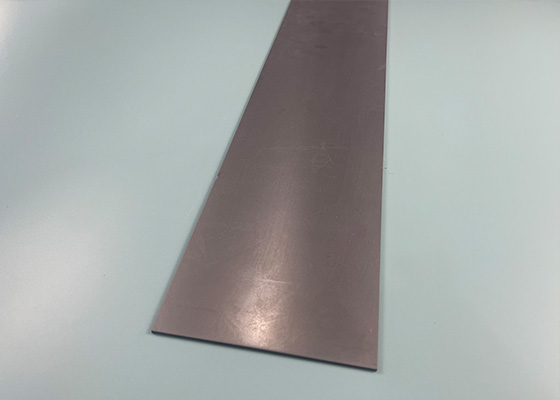
When purchasing a titanium alloy, specify both the product form and the delivery condition. The product form determines how much cutting, forming, or machining is needed to make the part. The delivery condition describes the state of the material when it arrives and can affect properties such as strength and ductility.
Choose the Product Form
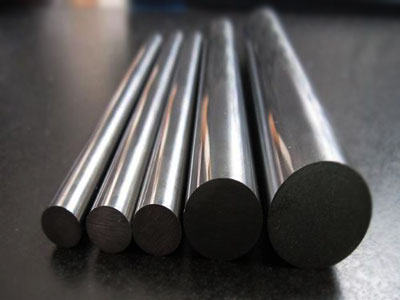
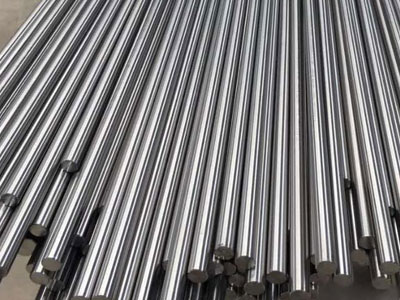
Start with the finished part and work backward. A flat component may be machined from plate, while a shaft or pin may be turned from round bar. The manufacturing route is especially important when the drawing calls for a particular surface finish, dimensional tolerance, or tube construction.
|
Product form |
How it is typically made |
What to specify when purchasing |
|
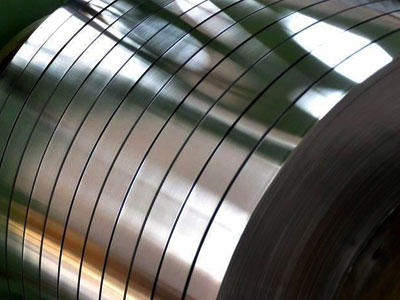
Sheet and plate |
Plate is typically hot-rolled. Sheet may be hot-rolled or further cold-rolled, depending on the alloy, thickness, and finish required. |
Thickness, width, length, and any required flatness, surface finish, or machining allowance. |
|
Bar and rod |
Hot-rolled or forged, depending on the alloy and size. |
Cross-section, diameter or side dimensions, cut length, and any required straightness. |
|
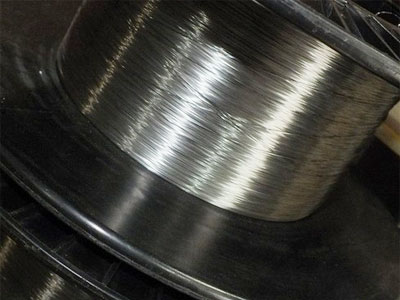
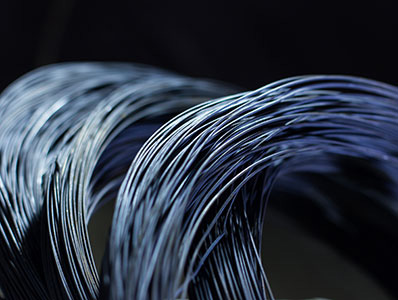
Wire |
Drawn through dies to reduce it to the required diameter. |
Diameter, tolerance, and whether it should be supplied in coils or straight lengths. |
|
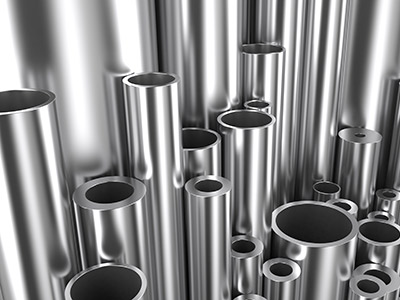
Seamless tube |
One common route uses hot extrusion to produce a hollow blank, followed by cold rolling or drawing to reach the final dimensions. |
Outside diameter, wall thickness, length, and the applicable seamless tube specification. |
|
Welded tube |
Sheet or strip is formed into a tube and welded along the longitudinal seam. |
Outside diameter, wall thickness, length, and any weld inspection or testing required by the specification. |
|
Forgings |
Stock is shaped under pressure to produce a blank closer to the finished part geometry. |
Part or blank drawing, machining allowance, and any required inspection. |
Confirm the Delivery Condition
The same grade can be supplied in different conditions, depending on the product form and applicable material specification.
Annealed material has been heat-treated and may be specified when ductility is important for further fabrication.
Solution-treated and aged material undergoes a heat-treatment sequence that can increase strength in alloys that respond to aging.
Conclusion
The right
titanium alloy must meet two requirements. It has to perform in service, and it has to suit the way the part will be made. If the part will be bent or welded, consider that step when comparing grades. It can influence which product form and delivery condition you purchase.
If the drawing already specifies a titanium alloy grade, use it to confirm the material standard, dimensions, and condition before ordering. If the grade is still open, start with the requirement that will narrow the choice most, such as a weight limit, a corrosive fluid, or a tight bend radius.
As a
titanium supplier, AEM Metal can help you check availability for the alloy grade, product form, and delivery condition you need. Send us your drawing or material requirements to request a quote.